Direct-to-film printing and embroidery can both produce professional branded apparel, but they create very different results. The right choice depends on the artwork, garment, quantity, expected use, and the impression the finished piece needs to make.
The short version
Choose DTF when the design depends on full color, gradients, small details, or flexible placement. Choose embroidery when the goal is a dimensional, stitched finish that feels especially at home on polos, jackets, workwear, and headwear.
Where DTF printing works best
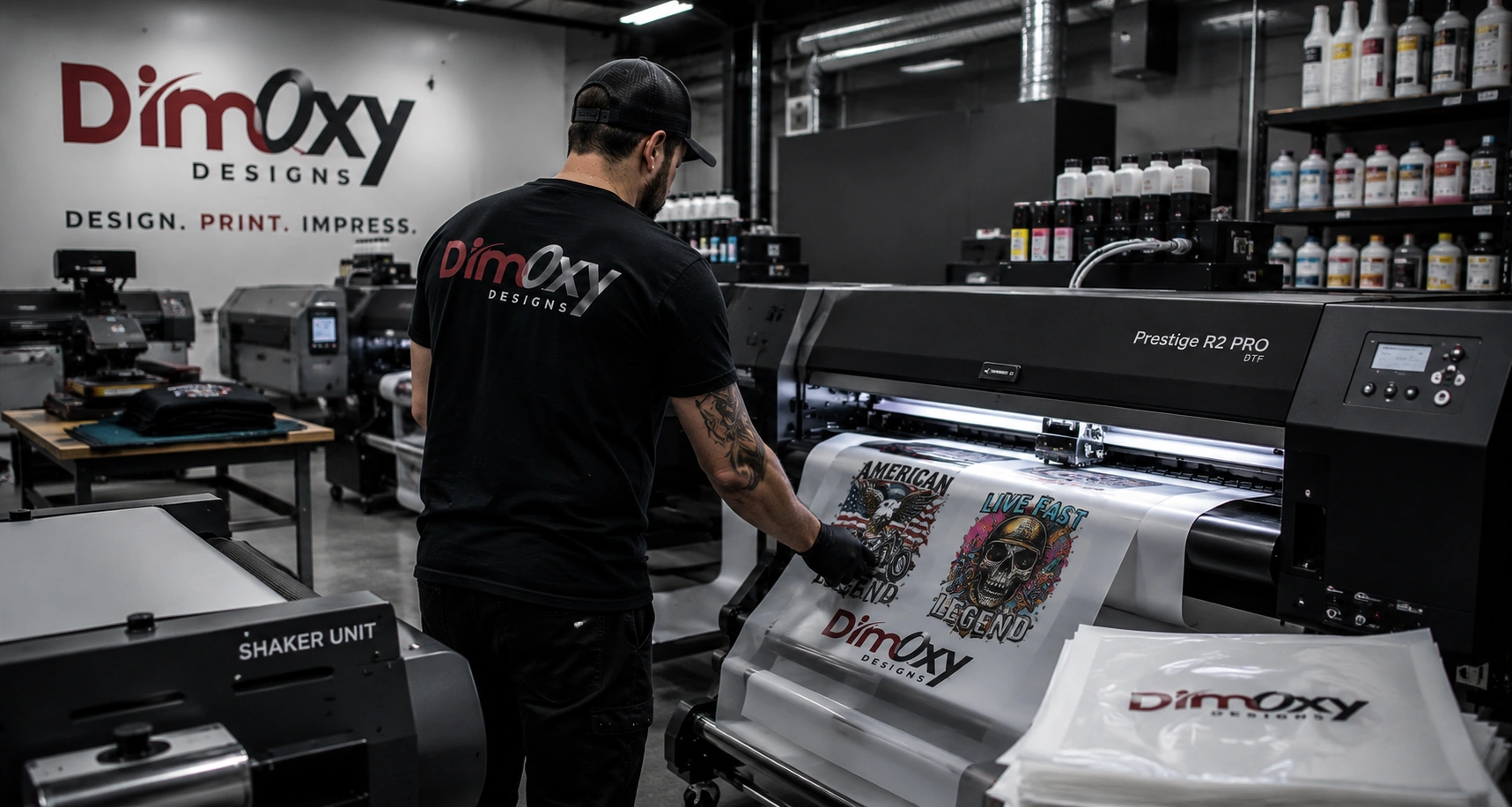
DTF transfers reproduce artwork as a printed layer that is applied to the garment with heat and pressure. This makes the process useful for designs that would be difficult to separate into a small number of thread colors.
- Full-color logos, illustrations, gradients, and photographic detail
- Small lettering and linework that need clean visual definition
- Short runs with multiple garment sizes or artwork variations
- Front, back, sleeve, and other placements that need a relatively flat finish
- Cotton, polyester, and many blended garments, subject to testing and care requirements
Because DTF does not charge by the number of artwork colors in the same way as some traditional processes, a colorful design can remain practical even for a modest quantity.
Where embroidery earns its place
Embroidery builds the design with thread. The result has texture, depth, and a classic uniform-ready appearance. It is especially effective when the logo is bold enough to translate into stitches without relying on tiny details.
- Polos, button-downs, jackets, aprons, and workwear
- Caps, beanies, and other structured or heavy accessories
- Simple logos with strong shapes and a controlled color palette
- Programs that need a consistent, premium appearance across staff apparel
Artwork must be digitized for embroidery, which means converting shapes into stitch paths, densities, directions, and underlay. That setup is part of what gives embroidery its structure, but it also means the original vector logo may need to be simplified.
Four questions that make the decision easier
1. How detailed is the design?
Tiny type, thin strokes, soft shadows, and color blends usually point toward DTF. Strong lettering and simplified marks can work beautifully in embroidery.
2. What garment will carry it?
A lightweight T-shirt and a structured cap behave differently. Fabric weight, stretch, texture, seams, and placement all influence which decoration method will sit correctly.
3. How should it feel?
DTF creates a smooth printed surface with some hand depending on the coverage. Embroidery adds a raised textile finish. Neither is universally better; the right answer is the one that fits the garment and brand.
4. Will one program need both?
Many apparel programs use embroidery on polos and caps while using DTF for graphic tees, event shirts, and detailed back prints. A shared color and placement plan keeps the pieces coordinated.
The decoration method should support the garment and the design, not force either one into the wrong job.
What to send for an accurate recommendation
Provide the artwork, garment type and color, placement size, quantity by size, and deadline. If the exact garment has not been selected, describe how it will be used and the price range you are targeting. We can then compare the practical options before production begins.
See more apparel and branded-product examples, or send your project details for a recommendation.
Put the guide into practice
Explore DTF printing in Las Vegas or custom T-shirts, then request a quote with your artwork, quantity and project details.